
From the World to Osaka (and Back): Tracing Japan's Curry Obsession, part 1
from Medicine to Modernity
By Sam Lozoff
August 1, 2026
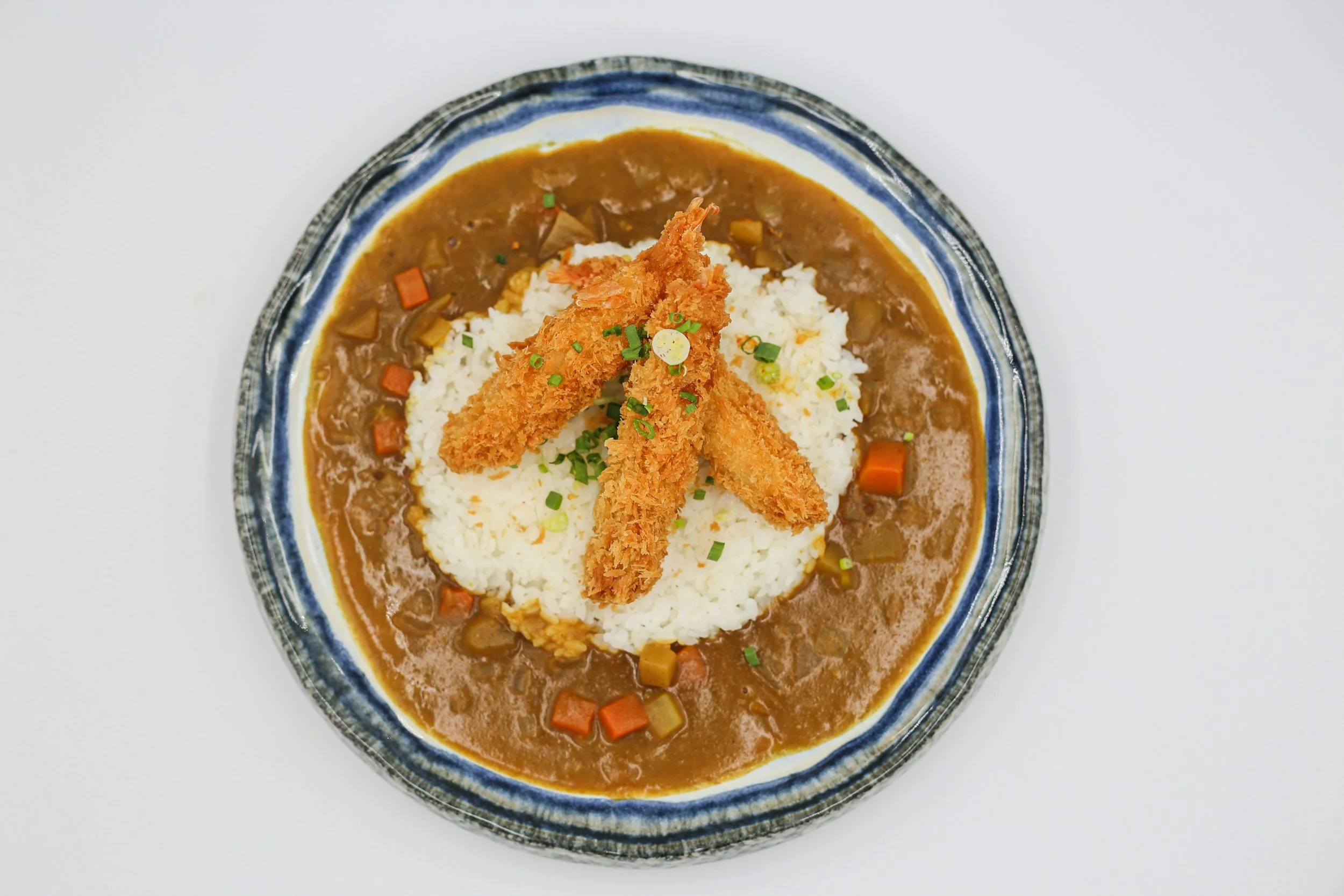
Curry routinely ranks among Japan’s most popular and most consumed foods[1],[2]. It’s now a staple on dinner tables, a favorite at school lunches, and an enmeshed part of the country’s restaurant industry. But curry’s journey to becoming one of Japan’s national dishes is a story of globalization, migration, and a relentless drive for adaptation.
Yet the true nexus of Japan's curry culture isn't the modern Tokyo metropolis, but the historic merchant capital of Osaka. This is the story of how a foreign import, with ties to Traditional Chinese Medicine, was filtered through the lens of a seafaring empire and found its spiritual home in Osaka's warehouses, pharmaceutical shops, and eventually, its cutting-edge restaurants. From the medicinal spices of kanpo to the budding biryani boom in Tokyo, the evolution of Japanese curry is a testament to the nation's ability to absorb, transform, and ultimately claim a dish as its own. This article explores how Osaka became the epicenter of this flavorful history and shaped the current "spice curry" trend that is writing the next chapter.
[1] カレーを「月に1回以上」食べる人は7割 自宅でよく食べるカレーは「ルウで作る」と「レトルト」https://prtimes.jp/main/html/rd/p/000000599.000004729.html
[2] Curry is a national food of Japan https://www.housefoods.com/japanese-curry/en/popular/national_food/
Part 1. A stocked pantry for “the nation’s kitchen”
During Japan’s Edo period (1600-1867), the shogunate maintained a national policy of seclusion to limit foreign influence, which was seen as a potential threat to the stability of the country. Despite restricting most foreign contact, the military dictatorship continued to permit some trade with the Dutch and Chinese, with goods exchanged in the Dejima harbor of Nagasaki. From Dejima, imports would flow towards the center of the nation, specifically to Osaka, which is where our story begins.
Osaka Bay and its network of well-connected inland waterways made Osaka the economic hub of Japan. Nearly all tradable goods, including commodities and foodstuffs, flowed through the vast warehouses and distribution channels of the city’s merchant class, hence the title “nation’s kitchen”. The nation’s rice prices were determined at Osaka’s Dojima Market. The famous “Kombu Road” created a trade corridor between Hokkaido, Osaka, and the adjacent Sakai City. And, crucial to our understanding of Japan's unique curry culture, Osaka was also the birthplace of Japan’s pharmaceutical industry.
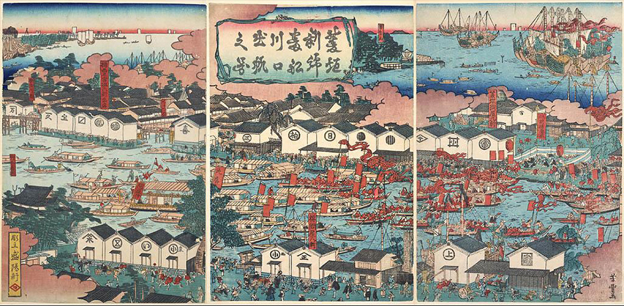
Osaka in the Edo Period. Painting by Yoshitoyo (1830-1866). “There were a number of kurayashiki (warehouse-residences) surrounding riverbanks in Osaka with many ships voyaging back and forth.”[3]
[3] Dojima Rice Exchange - World’s First Futures Exchange. https://www.jpx.co.jp/dojima/en/index.html
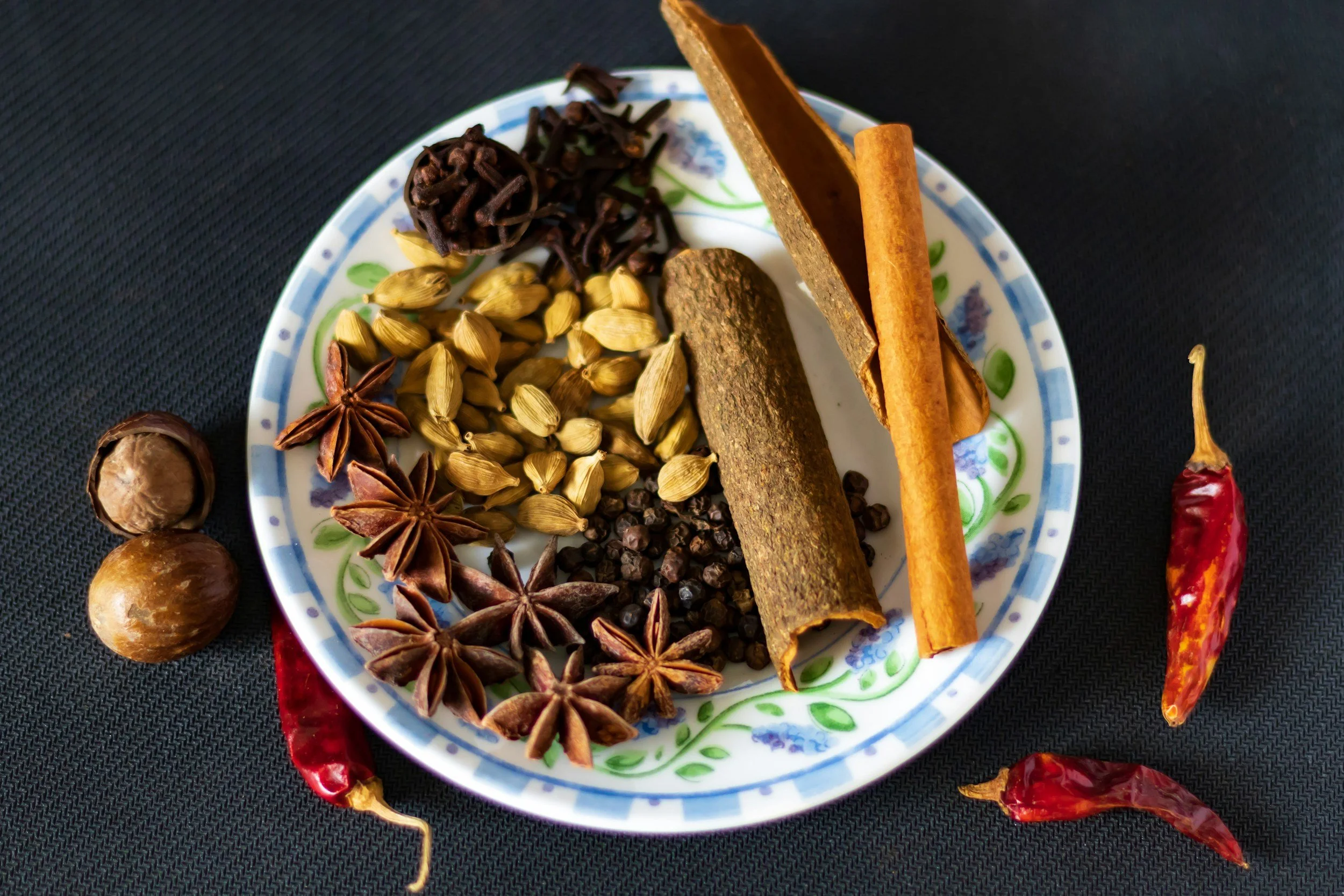
But what do pharmaceutical companies have to do with curry? Well, the city’s Doshomachi area was lined with medicine wholesalers who had the exclusive role of pricing and distributing medicine and medicinal ingredients. But we’re not talking about the synthesized drugs common in modern medicine. It was the natural remedies common in Japanese Kanpo medicine – whose formulas were derived from those of Traditional Chinese Medicine – which may have laid the foundation for the country’s future curry obsession. Spices, barks and roots like cinnamon, cardamom, licorice root, and ginger would have all been commonly traded in Doshomachi. While a direct connection is difficult to prove, this early exposure to aromatic spices may have primed Japanese palates for the culinary revolution to come.
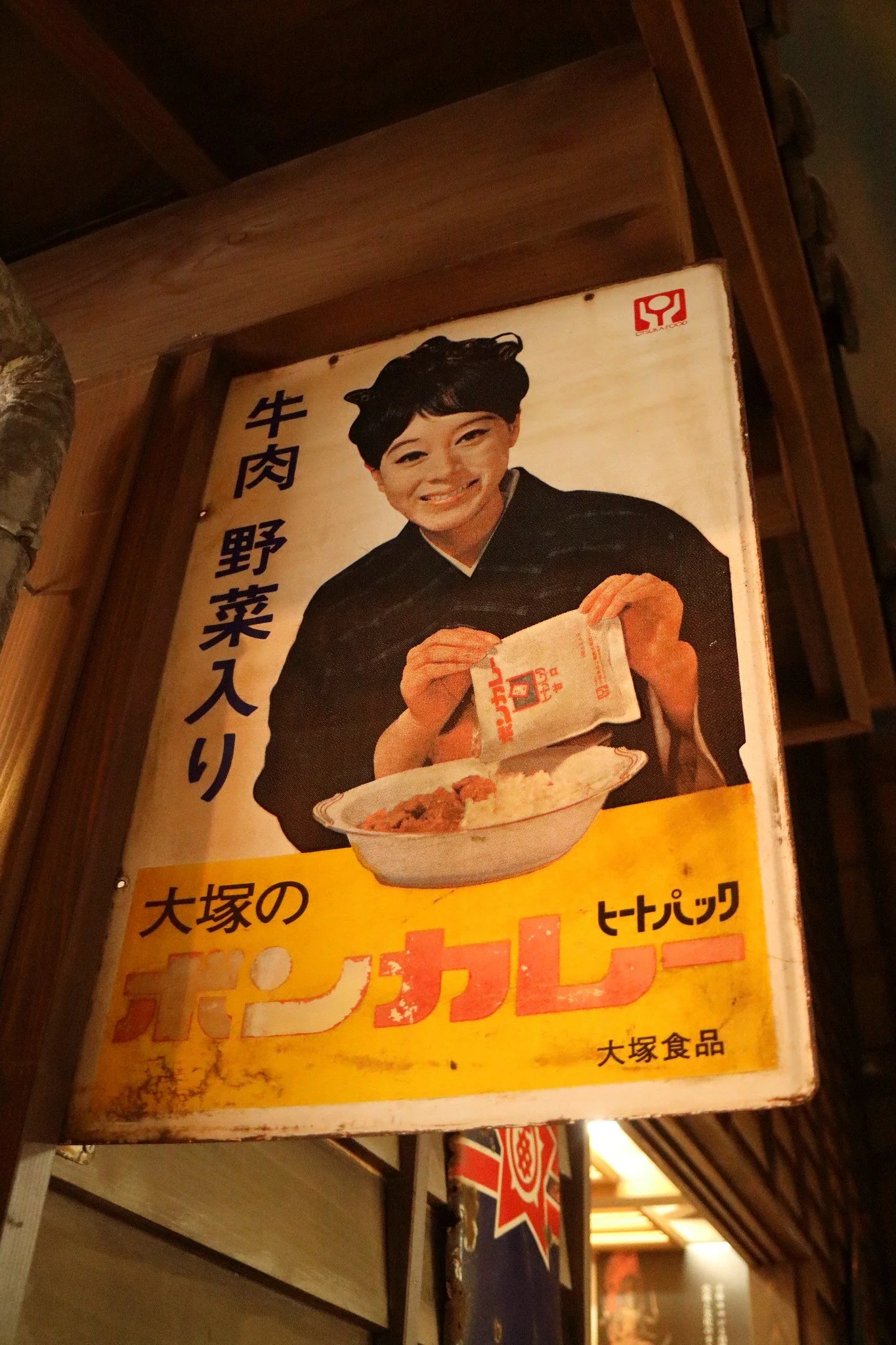
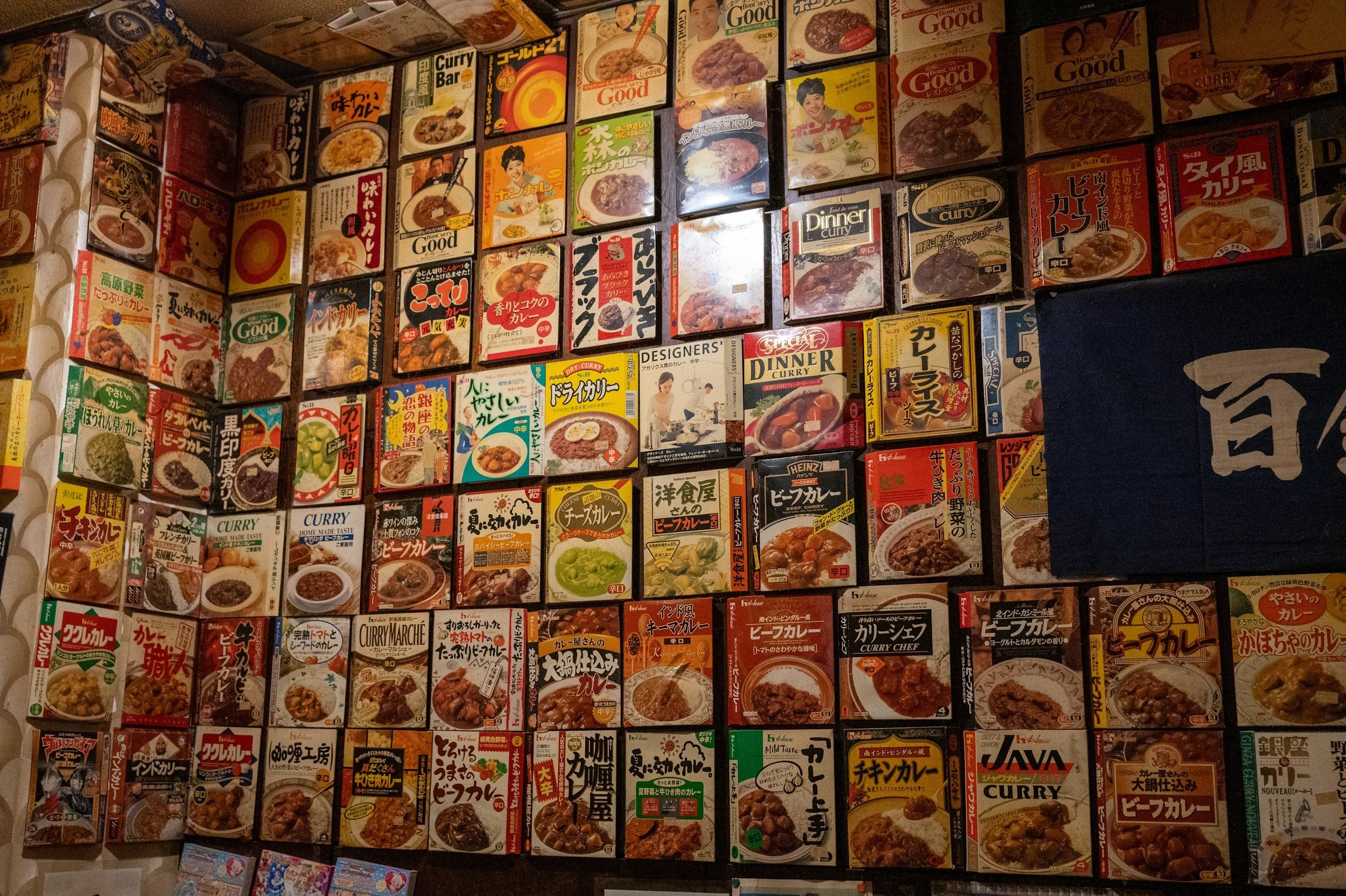
A vintage Otsuka Foods Bon Curry advertisement for their 'heat pack' retort pouch curry
In a synergistic twist, the fall of the Tokugawa shogunate in the 1860s – along with its policy of national seclusion – led to the establishment of new trade routes with imperial Britain. And curry powder was, for the first time, being exported directly from India and into the freshly opened borders of Japan and distributed by Osaka’s vast merchant networks. And these freshly imported curry powders, inspired by British-adapted Indian formulas, were further adapted to Japanese sensibilities.
In 1905, the first branded, domestically produced curry powder was brought to market by Yamatoya, a drug wholesaler in Osaka (now Hachi Foods). This was followed by a new curry powder from Osaka-based Urakami Shoten (now House Foods) developed in 1926 and one from Higashiya (now S&B Foods) in Tokyo in 1930. Unsurprisingly, Urakami Seisuke, the founder of Urakami Shoten, had previously worked as a medicine wholesaler in Osaka. Then, 40 years later, Osaka-based Otsuka Foods created Bon Curry, the first ready-to-eat curry in a pouch in 1968. Osaka, the heart of Japan’s pharmaceutical industry, had established itself as Japan's first curry capital.
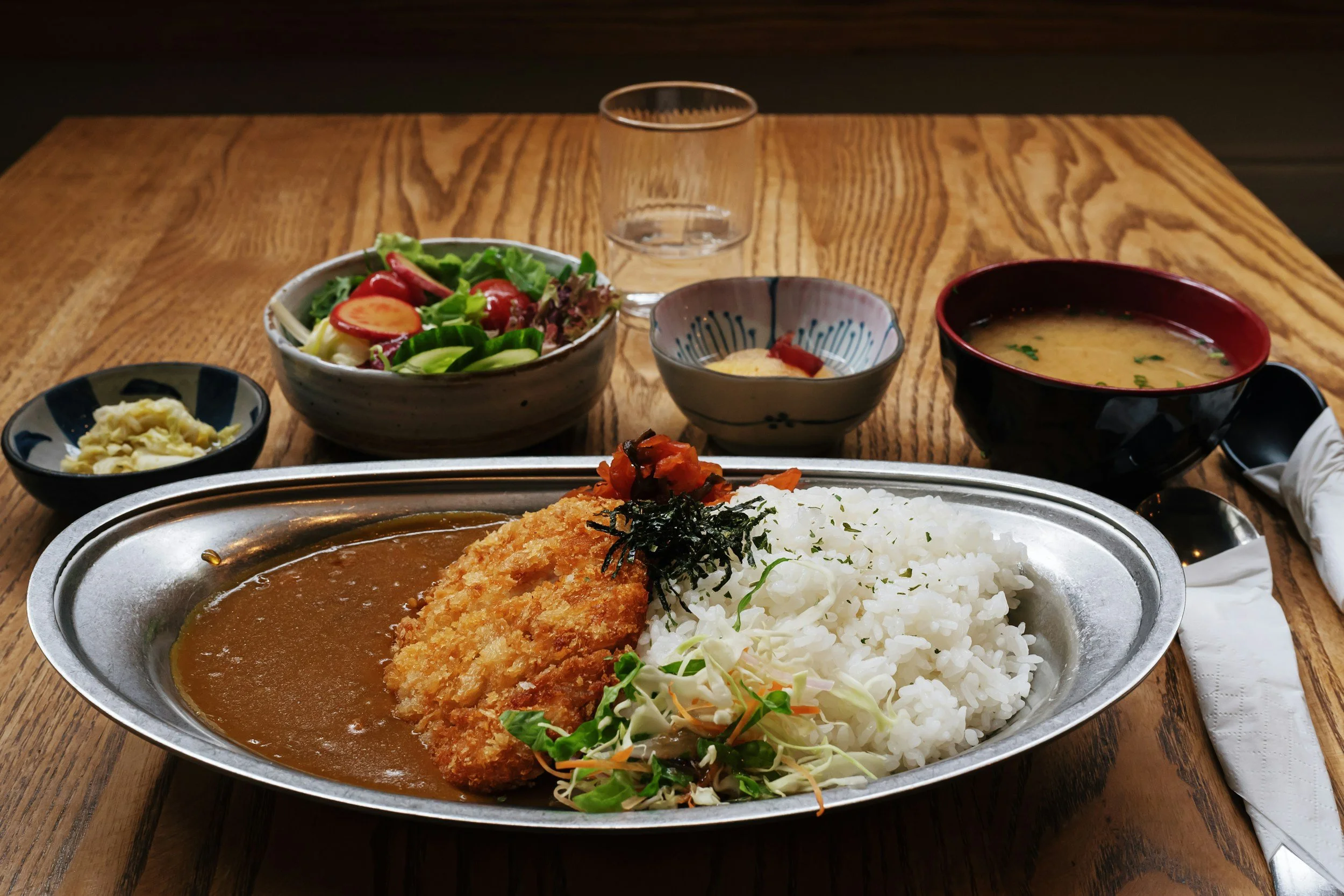
These new spice blends began spreading through homes, schools, and military canteens in the first half of the 1900s. Starting in the 1950s, the image of curry would be dominated by the spiced roux blocks with the first product developed by Bell Shokuhin. Popularity didn’t explode until the introduction of Vermont Curry, a roux block which was considered milder since it was sweetened with apples and honey. This gave it mass appeal among young children and adults alike.[5]
The curry evolution continued in the following decades, as foreign influence played an even larger role in the changing in the country’s culinary landscape. New flavors from abroad and new foodways domestically would carve out a new role for spice and curry in the last quarter of the 20th century.
[5]日本のカレー カレーが国民食になるまでの歩 https://housefoods.jp/data/curryhouse/know/trends01.html