
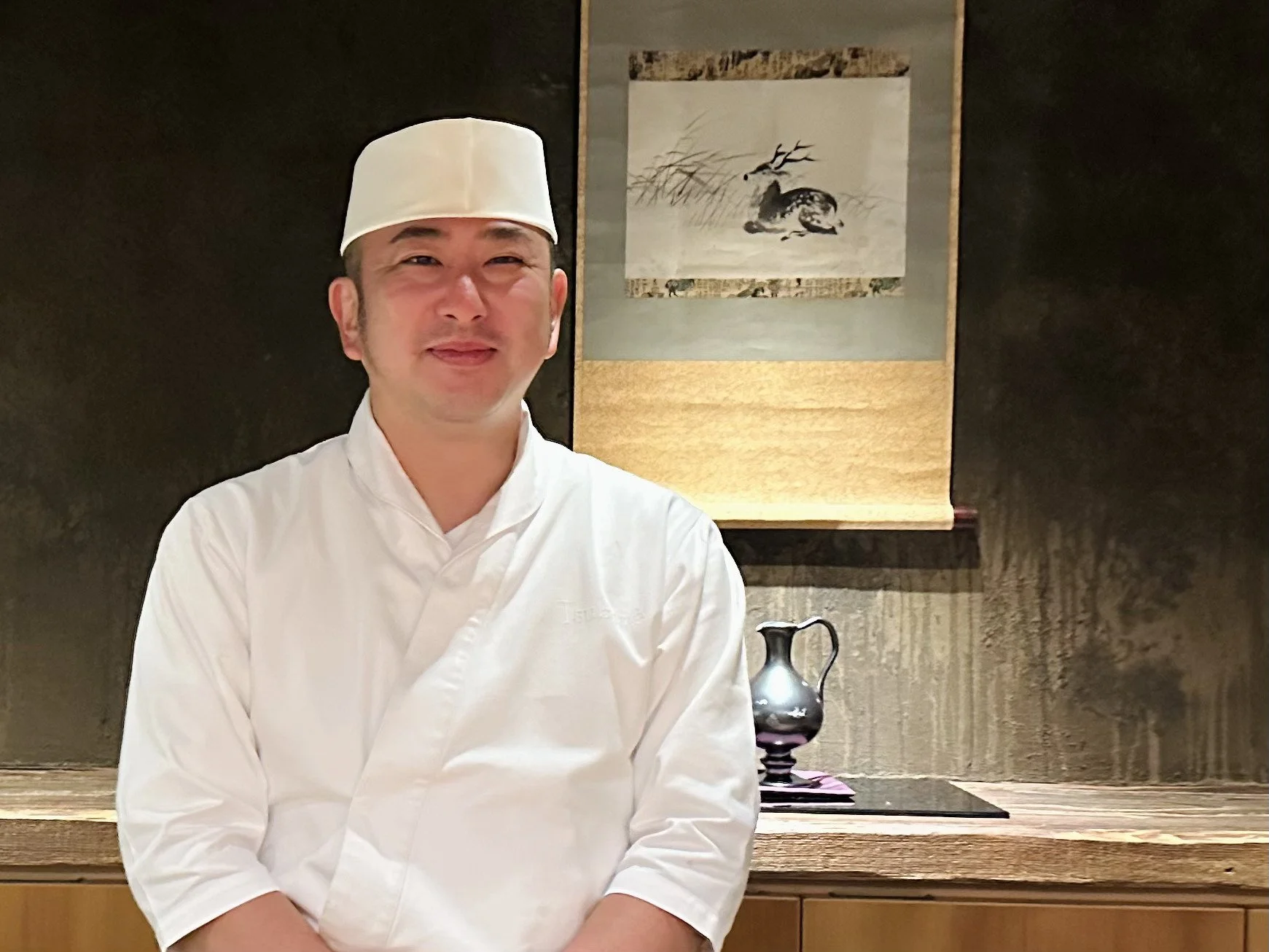
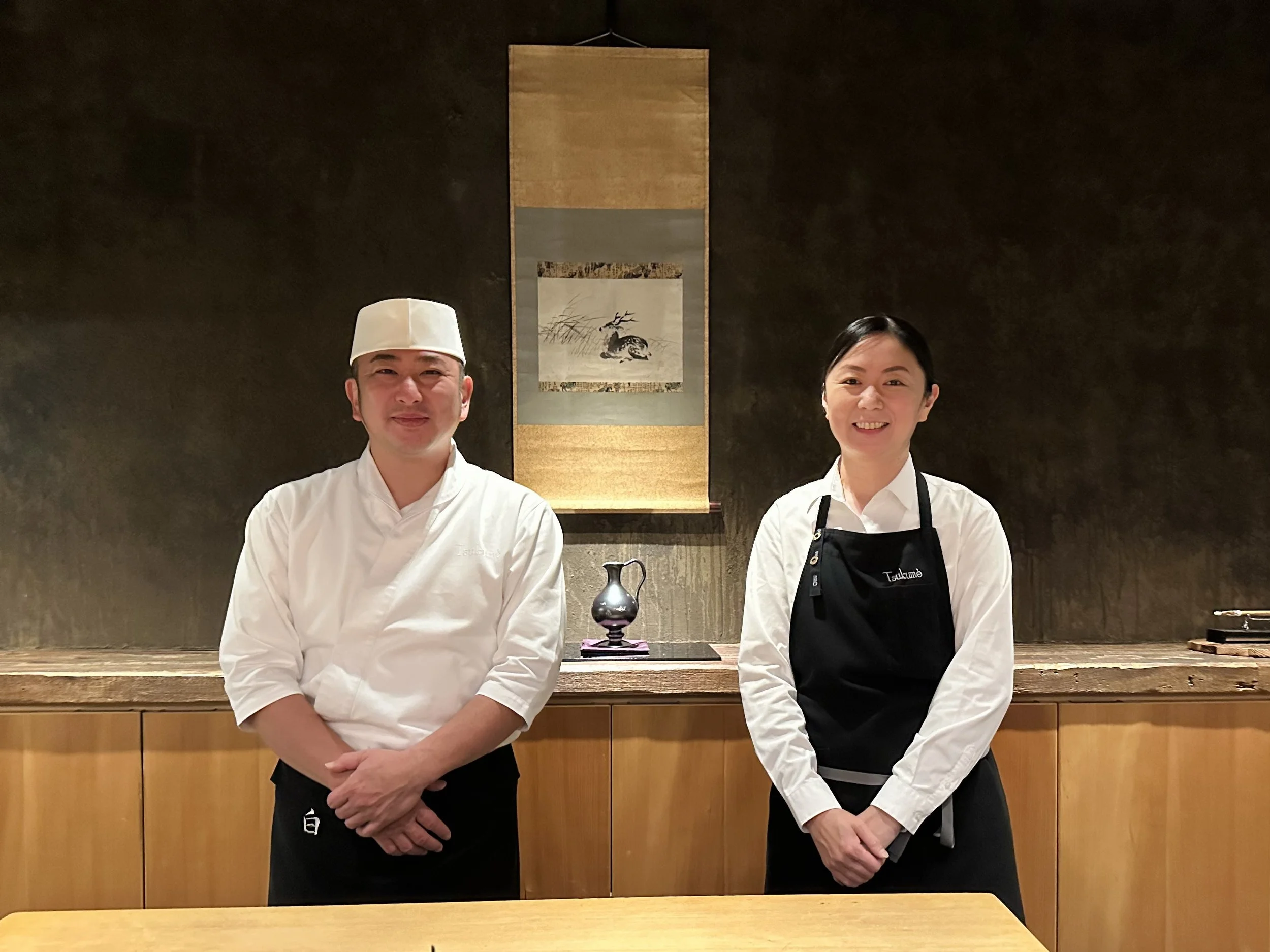
Chef Masato Nishihara, chef-owner of Tsukumo, Nara Prefecture, Japan
By Hiroko Shimbo Beitchman
January 4, 2026
Beyond Kaiseki: The Chef Who Plates Japanese History
Chef Masato Nishihara was the opening chef and operated Kajitsu, the first authentic Shojin-ryori (Buddhist temple-vegetarian cuisine) restaurant in New York City, for two years, beginning in 2009. In 2011, during his reign and before he left, the restaurant earned a Michelin star. Chef Nishihara’s dishes showcased a highly refined, artistic approach to his cuisine, reflecting deep knowledge of Japanese history and culture and demonstrating creativity and an appreciation of the world around him.
Chef Masato Nishihara was the opening chef and operated Kajitsu, the first authentic Shojin-ryori (Buddhist temple-vegetarian cuisine) restaurant in New York City, for two years, beginning in 2009. In 2011, during his reign and before he left, the restaurant earned a Michelin star. Chef Nishihara’s dishes showcased a highly refined, artistic approach to his cuisine, reflecting deep knowledge of Japanese history and culture and demonstrating creativity and an appreciation of the world around him.
Chef Nishihara, now based in Nara, Japan, stands out among the many Kaiseki chefs worldwide. Those chefs prepare meals aligned with the philosophy and kitchen guidelines of this style, including the expression of seasonality through the ingredients they employ, presentation, and seasonal events. The cuisine features precision and cleanliness in every dish. But Chef Nishihara goes beyond these ideas and creates dishes inspired by the rich history of Japanese culture, as no other Chef that I know of does.
Chef Nishihara recently told me, “I was trained in Kyoto, and worked in New York City and London. Nara, Japan’s first capital serving as the imperial seat – Heijo-kyo - from 710AD to 794AD, is the location I chose for my own restaurant, Tsukumo. In those early days, Nara was a vibrant hub that received significant cultural, political, religious, and social influences from China and Korea. Treasures from the West traveled east via the Silk Road to China and then arrived here in Japan. I dig deeply into the history of this old capital city for inspiration, creating a course meal that conveys to the diners the stories of this former capital’s golden age.”
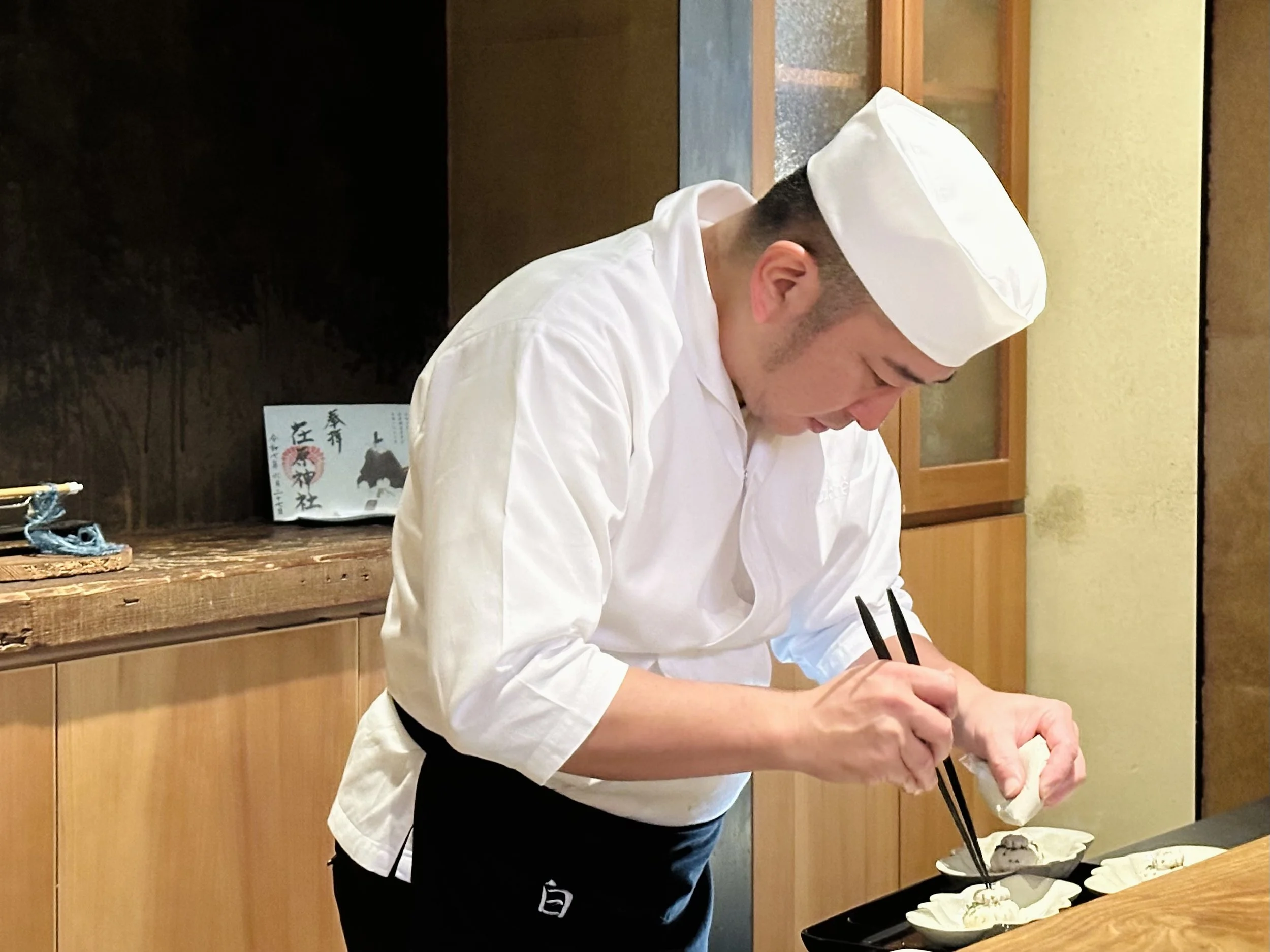
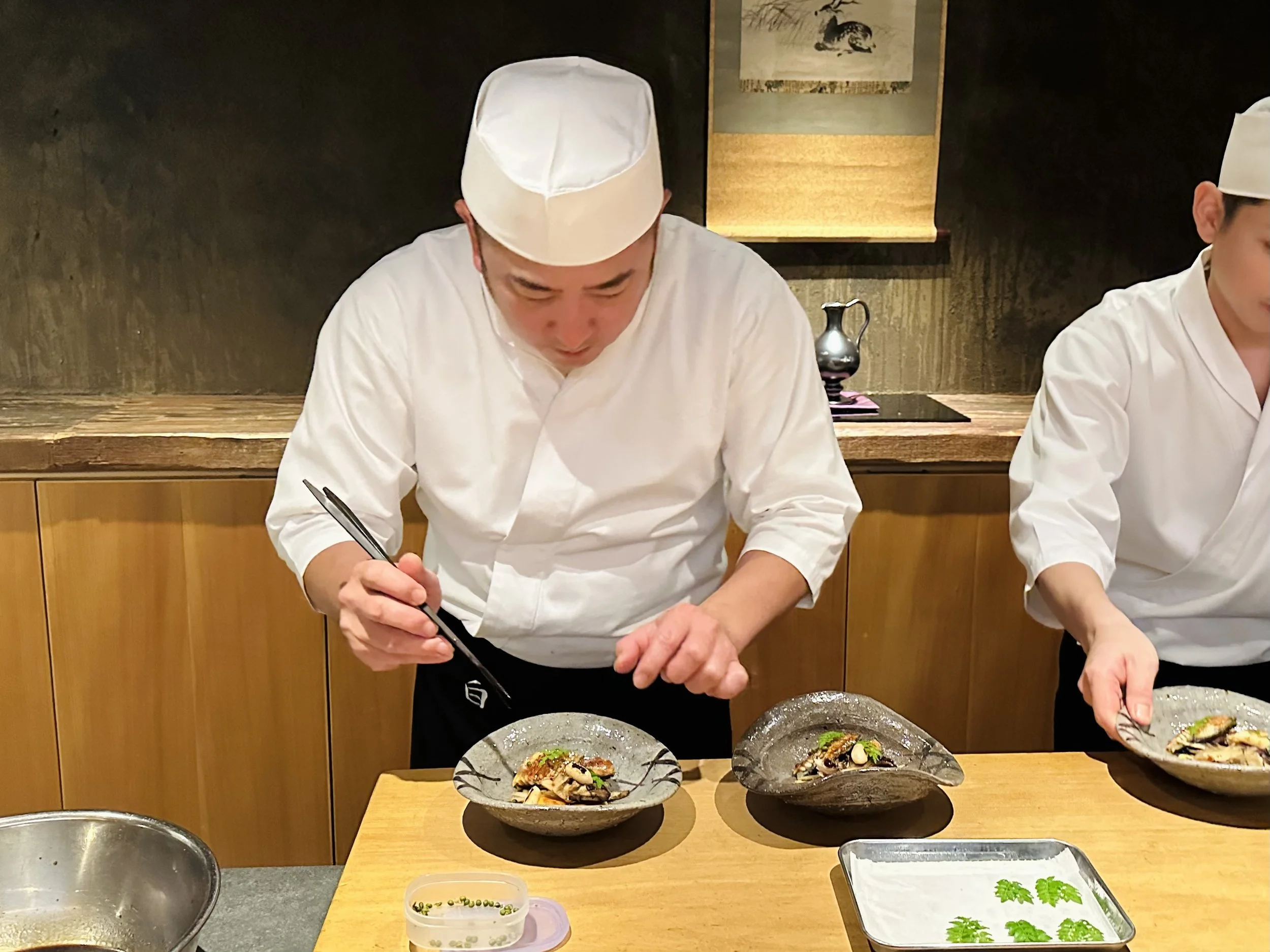
My visit to the restaurant in November coincided with the 77th Annual Exhibition of Shoso-in Treasures, which are stored at the Shoso-in, a part of the famous Todaiji Temple in Nara. The Shoso-in holds approximately 9,000 treasures, primarily from the 8th century. Once a year, the Imperial House of Japan orders the opening of the Shoso-in for the inspection of these historical relics. And each year, a few treasures are selected for public display at the yearly Shoso-in Treasures Exhibition at the Nara National Museum. Chef Nishihara creates an impressive Kaiseki course meal inspired by stories related to the treasures he encounters at each year's exhibition.
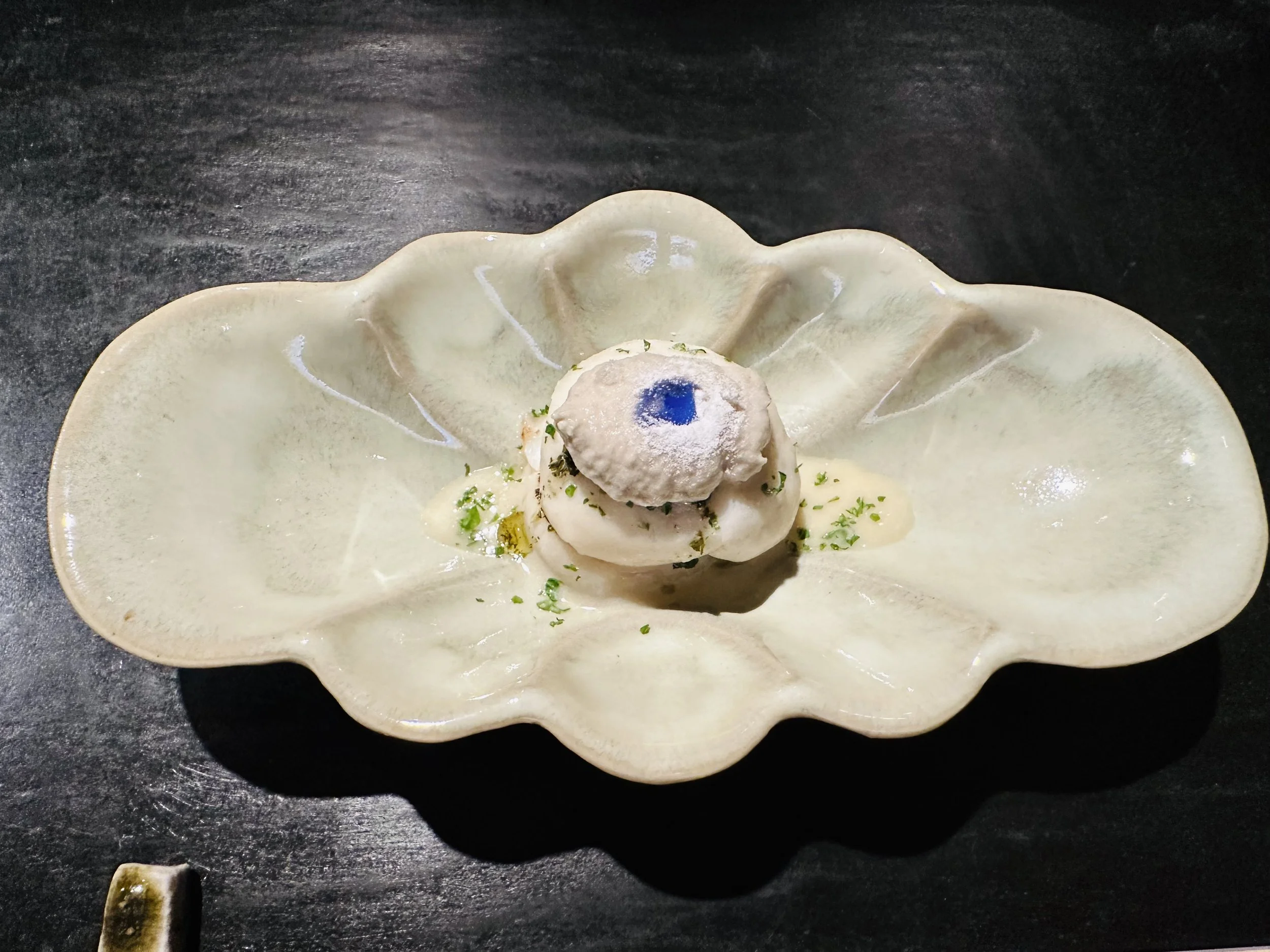
One of this year’s exhibition items – a boat-shaped, eight-lobed silver cup from 6th-century Iran, Sazan Persia - inspired the Chef to create a unique Sakizuke (appetizer dish). He plated a Japanese-style scallop-and-clam quenelle on a platter, an imitation of the Persian boat-shaped treasure. The topping of the quenelle – grilled, pureed eggplant – suggests a connection to a traditional Iranian dish, Kashk Bademjan. The sauce made from butterfly pea flowers on top of the eggplant evoked a lapis lazuli jewel.
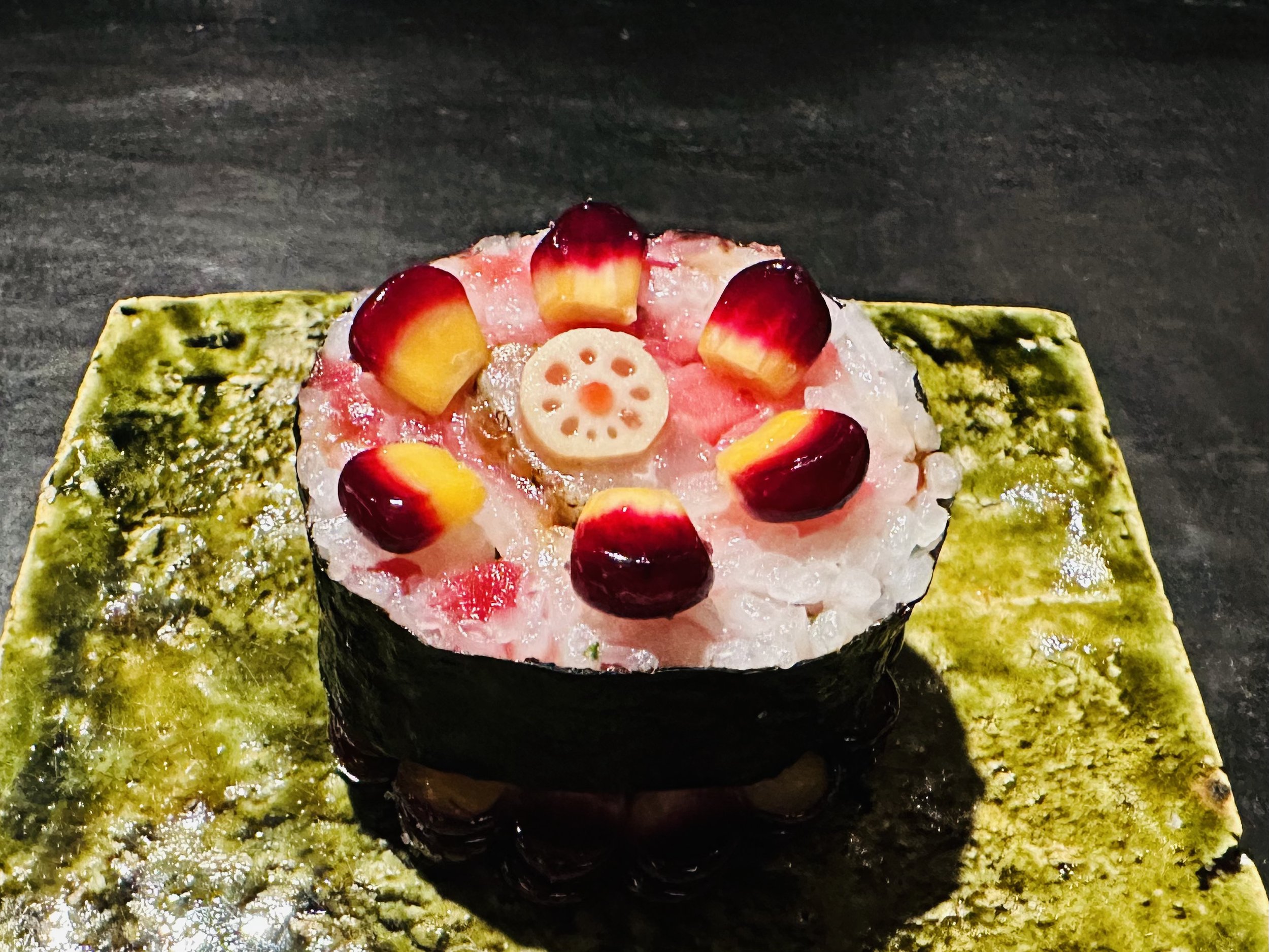
The bronze mirror, another treasure, whose back is studded with colorful gemstones, inspired the Chef to create a bite-sized, stunning makizushi, rolled sushi, garnished with burgundy-hued corn kernels, imitating the ancient jewels. This red corn was developed in 2022 by a 100-year-old seed company located in Nara Prefecture.
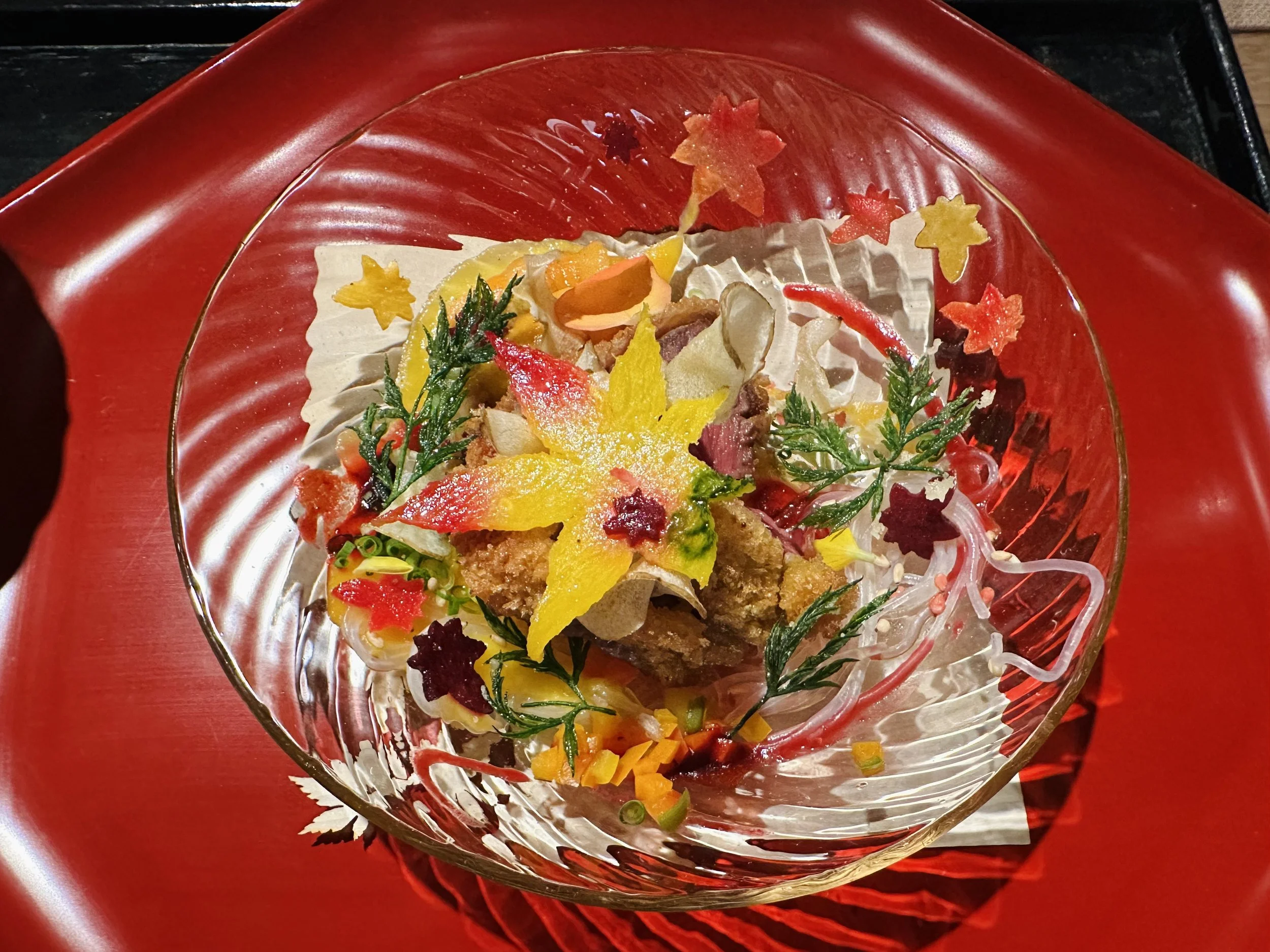
When Chef Nishihara’s Kaiseki course reached the Agemono (deep-fried) dish, the story of the meal opened a new page. The creation of the dish was inspired by a poem by a renowned poet, and said to have been the most handsome figure of the ancient Japanese court, Ariwara no Narihira. The verse reads, ‘Even in the age when miracles were performed by gods, the Tatsuta River has never been more gorgeously colored than it is now with so many beautiful, crimson-colored autumn leaves in water.’ Chef Nishihara reflects this image with a sliced beef cutlet, garnished with a crimson sauce and lavishly decorated with thin yellow carrot slices cut into the shapes of maple leaves of different sizes, dyed with vegetable dyes in many colors, thereby allowing us to experience the river scenery of the poem. The inclusion of this dish in the course meal commemorates the 1200th anniversary of the poet’s birth this year.
The Chef describes his cooking style as ‘evolving at any moment’. Chef Nishihara continues to learn and grow, and we must do the same to appreciate a meal prepared by one of the greatest chefs of this generation. Every decision we make is shaped by a clear sense of purpose. Our journey has been anything but ordinary. Through every step, we've focused on staying true to our values and making space for thoughtful, lasting work.