
Hisuinasu 翡翠ナス
The Ultimate Autumn Eggplant
By Hiroko Shimbo Beitchman
September 18, 2026
Hisuinasu Preparation
Hisuinasu is a refined autumn dish in which eggplant is fried, peeled, and served in flavored dashi stock. In fall, eggplant exposed to alternating cool and warm air develops richer flavor, thinner, more delicate skin, and higher moisture content. These conditions create the perfect environment for this traditional technique.
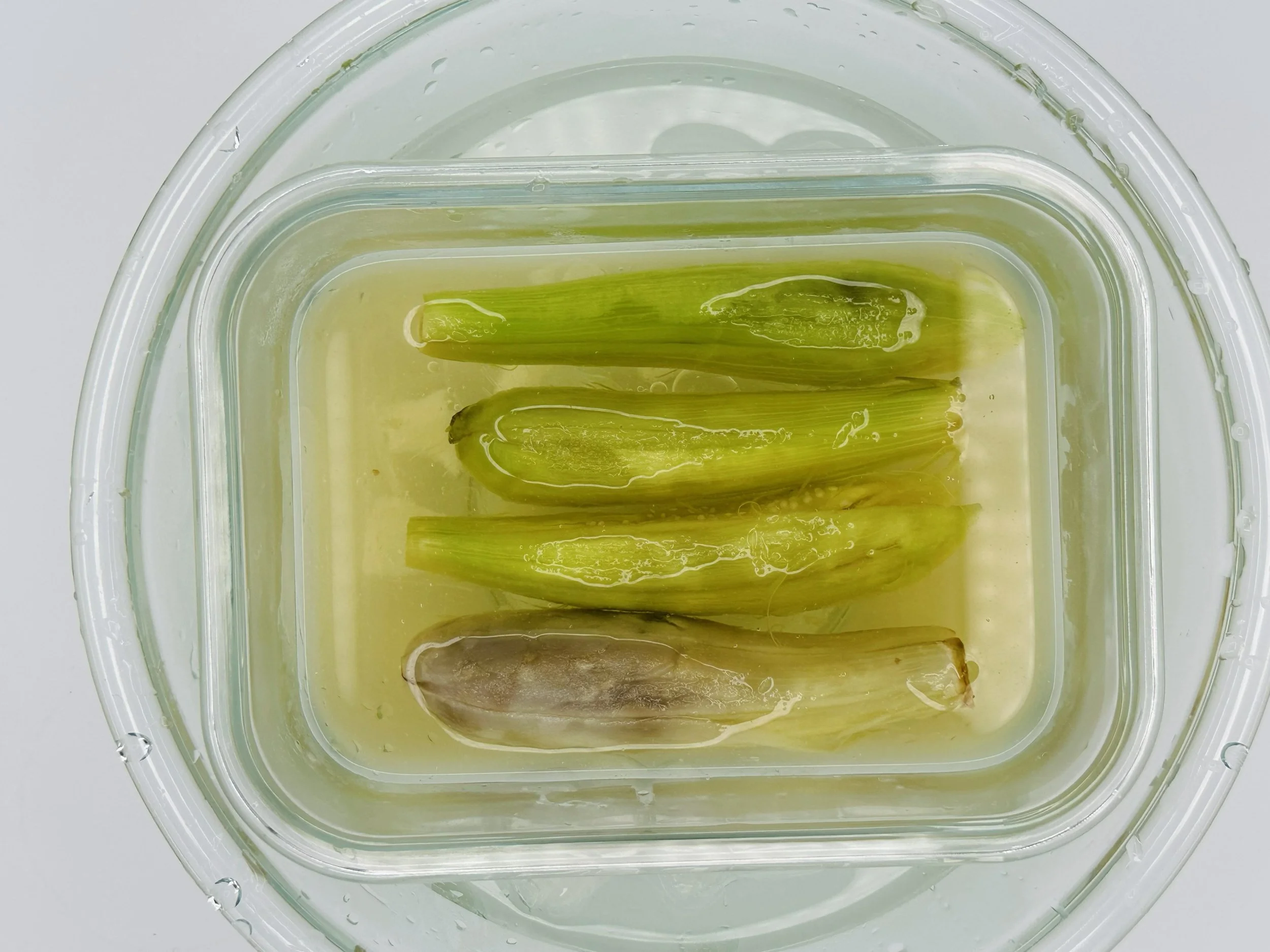
Hisui means jade, and nasu means eggplant. When prepared correctly, the flesh turns a beautiful jade green —visually stunning, juicy, and deeply flavorful.
Eggplant is rich in polyphenols, so it can brown quickly. To preserve the jade color, the preparation relies on a sequence of techniques that control oxidation and heat:
Lightly score the skin — A shallow lengthwise score makes peeling smooth.
Pierce the center with a chopstick — This creates a channel that allows fast, even cooking from the inside out.
Fry while constantly rolling — Continuous movement coats the entire surface with hot oil, helping fix the green color.
Shock in ice water and peel while warm — Rapid cooling stops oxidation; peeling while warm ensures the color and keeps the surface smooth.
Cool completely and marinate in seasoned dashi — Full cooling sets the jade color and prepares the eggplant to absorb delicate umami.
The result is a silky, green, jewel‑like eggplant. If one or more of your eggplants do not turn that beautiful jade‑green, don’t blame your technique — blame the eggplant itself. Some eggplants simply do not turn that color because of low chlorophyll content, high polyphenol content, and varietal differences.
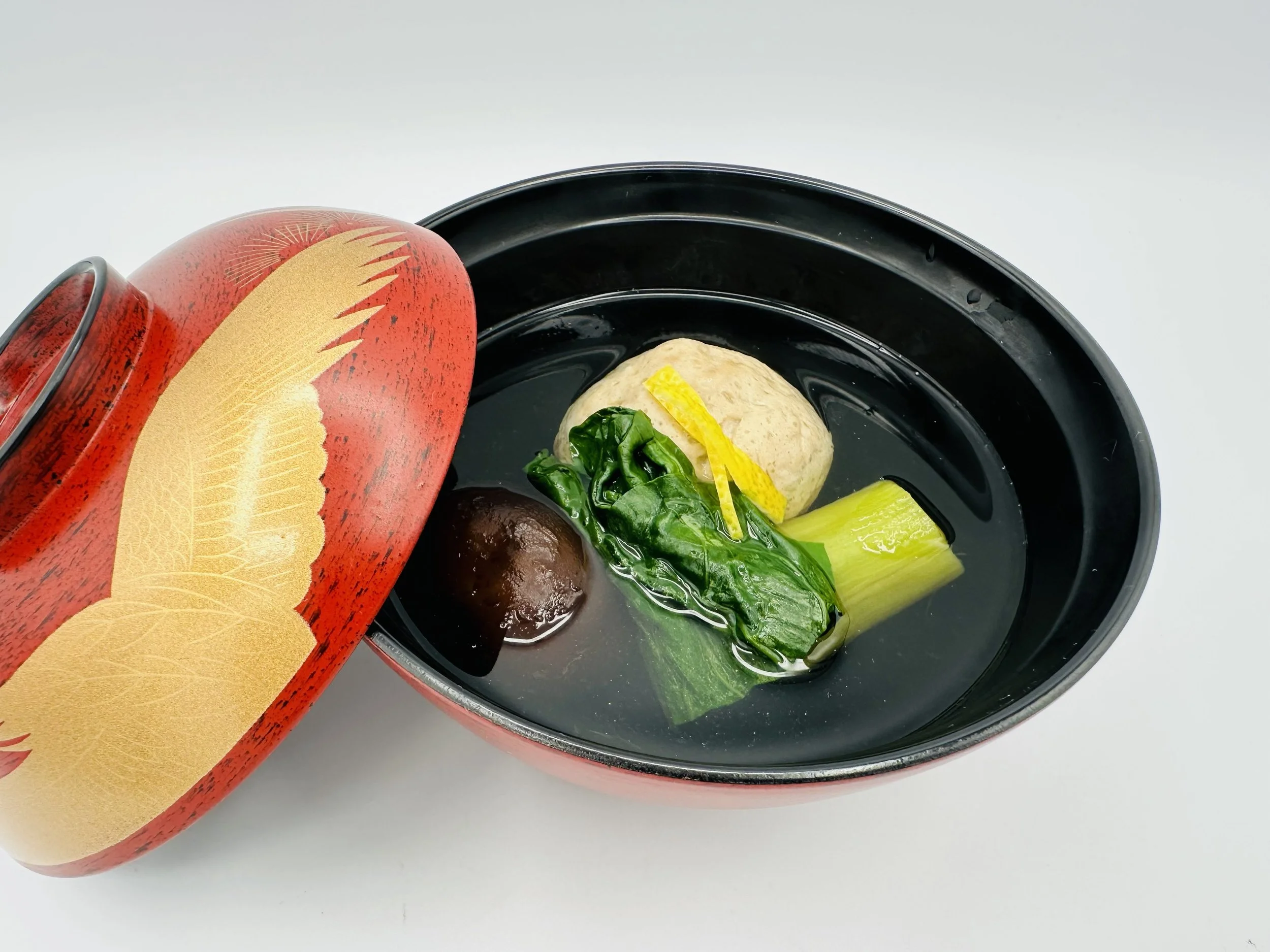
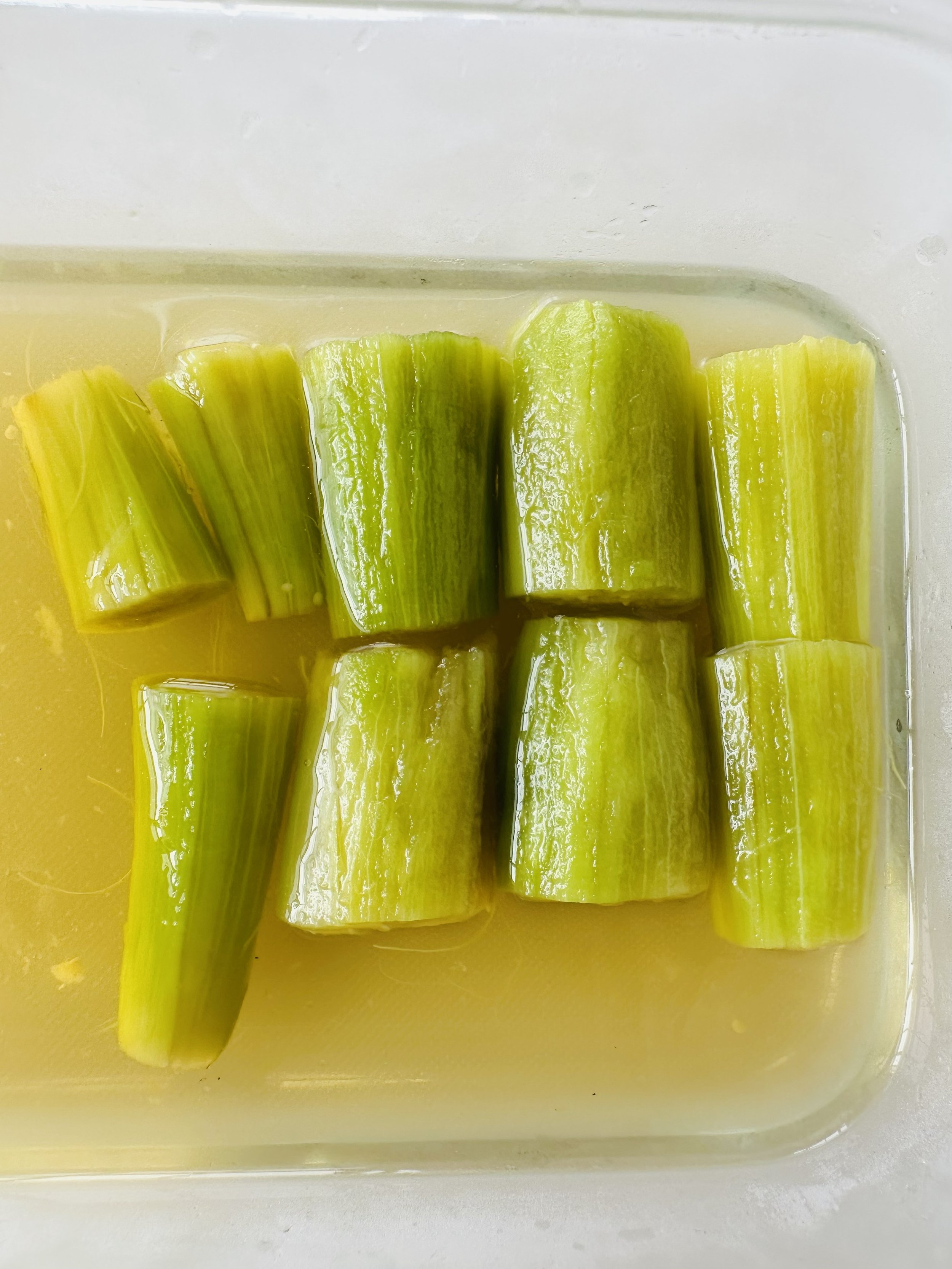
I serve Hisuinasu cut into pieces and topped with finely shredded itokatsuo (a delicate katsuobushi garnish). I also often use Hisuinasu in suimono, where its elegance shines.
For best results, choose Japanese eggplant or Holland eggplant — both are tender and less seedy.
Hisuinasu Recipe
Ingredients:
4 Japanese or Holland eggplants
Canola oil (for frying)
1 cup dashi
24 ml usukuchi shoyu (light-color soy shoyu)
24 ml mirin
Method:
1. Prepare the eggplant – Remove the leafy cap and cut off the stem. Make a shallow lengthwise score on the skin. Using a wooden or steel chopstick, pierce straight down through the eggplant's center. This helps the eggplant cook evenly.
2. Fry – Heat canola oil to 340°F (170°C). Add the eggplants and roll them constantly in the oil for 4–5 minutes. They are ready when they feel tender when pressed. In my video, I touch the eggplant directly to show doneness, but I don't recommend others do this—the surface is extremely hot. Use chopsticks or tongs to check tenderness instead of bare fingers.
3. Shock and peel – Transfer the eggplants immediately into ice water. Quick cooling is essential for preserving the jade color. While still fairly hot, peel the skin. Return the peeled eggplants to the ice water until fully cooled.
4. Prepare the marinade – Combine dashi, usukuchi shoyu, and mirin in a pot. Bring to a gentle simmer.
5. Marinate – Remove the cooled eggplants from the ice water and place them on paper towels. Gently press to remove excess water. Transfer to a container and pour the hot seasoned dashi over. Set the container over ice water to cool the liquid quickly. Refrigerate and marinate for 3 hours.
6. Serve – Cut the eggplants into bite‑sized pieces. Spoon 1–2 tablespoons of the marinating liquid over them. Top with itokatsuo (finely julienned katsuobushi).